
Shaaleya Angaladalle Taaralaya
Karnataka’s Digital Mobile Planetarium Programme
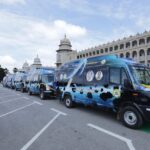
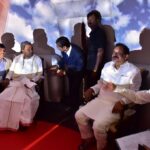
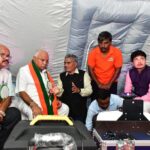
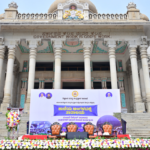
Shaaleya Angaladalle Taaralaya is Karnataka’s flagship Digital Mobile Planetarium Programme, relaunched by the Government of Karnataka through the Karnataka Science and Technology Promotion Society (KSTePS) in partnership with Varnaaz Technologies. This initiative brings a fully immersive, 360-degree astronomy experience directly to government schools, ensuring that every child, urban or rural, gets access to high-quality STEM and space education. The relaunch was inaugurated by Hon’ble Chief Minister Shri Siddaramaiah on 27 November 2025 at Vidhan Soudha, Bengaluru.
This mobile planetarium programme is designed to make science learning experiential, inclusive, and accessible, breaking traditional barriers faced by underserved regions.
For decades, access to astronomy and scientific infrastructure in Karnataka was limited only to students living near fixed planetariums in major cities. Rural and remote regions struggled with long travel distances, a lack of transportation, and financial constraints. As a result, millions of students never experienced a planetarium or a visual science learning environment.
To bridge this educational divide, the Government launched Shaaleya Angaladalle Taaralaya, bringing the universe directly to school campuses through a mobile, digital, and curriculum-aligned planetarium model. The programme eliminates location-based barriers and ensures that quality science education reaches every government school student, regardless of geography or background.
What Is a Mobile Digital Planetarium?
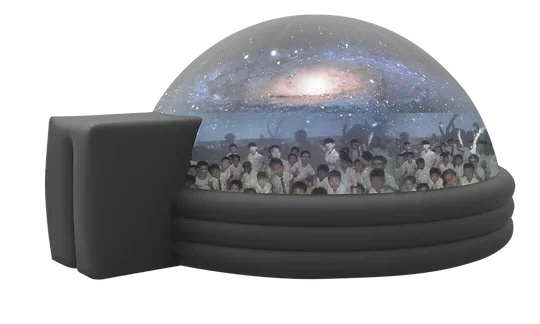
A Mobile Digital Planetarium is a portable, GPS-enabled dome theatre equipped with advanced 360-degree projection technology that simulates the real night sky, planets, constellations, eclipses, seasons, and outer space environments.
Key Features of the Digital Mobile Planetarium
5-meter inflatable dome seating 35–40 students
High-resolution fish-eye lens projector for seamless sky projections
Curriculum-aligned astronomy software
AC system, ventilation blower, and comfortable dome environment
UPS and generator for uninterrupted operation
GPS tracking system for monitoring movement and project progress.
These components work together to deliver a world-class, immersive digital science experience right inside the school premises.
Programme Journey and Achievements
The Shaaleya Angaladalle Taaralaya initiative began in 2016 with a pilot in Chikkaballapur launched by Sri Siddaramaiah. Within two months, the pilot reached over 10,000 students. Encouraged by its success, the project expanded across multiple regions, including the large-scale rollout supported by Kalyana Karnataka Region Development Board (KKRDB) in 2019.
Between 2017 and 2025, the programme achieved outstanding reach:
7,920 schools visited
55,440 planetarium shows conducted
22,17,600 students and teachers reached
This makes it one of India’s largest science outreach programmes ever implemented by a State government.
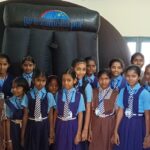
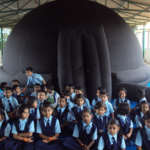


Impact of the Programme
A comprehensive evaluation by the Karnataka Monitoring and Evaluation Authority (KMEA) and KLE Technological University revealed powerful outcomes:
Massive Increase in Science Interest
98% of students reported increased interest and understanding of astronomy and science topics.
Many students experienced a real planetarium show for the first time.
Stronger Classroom Engagement
Teachers observed:
Better conceptual clarity
Increased curiosity and critical questioning
Improved participation in science discussions
Inspiration Toward STEM Careers
93% of students expressed interest in pursuing higher studies or careers in science, engineering, technology, or research after the program.
How the Programme Works
The mobile planetarium team arrives at the school with a complete digital dome setup. Students are first introduced to the concepts through an interactive session that builds curiosity and prepares them for the show. They are then shown a short curriculum-aligned educational video explaining fundamental topics such as the solar system, eclipses, stars, and planetary motion.
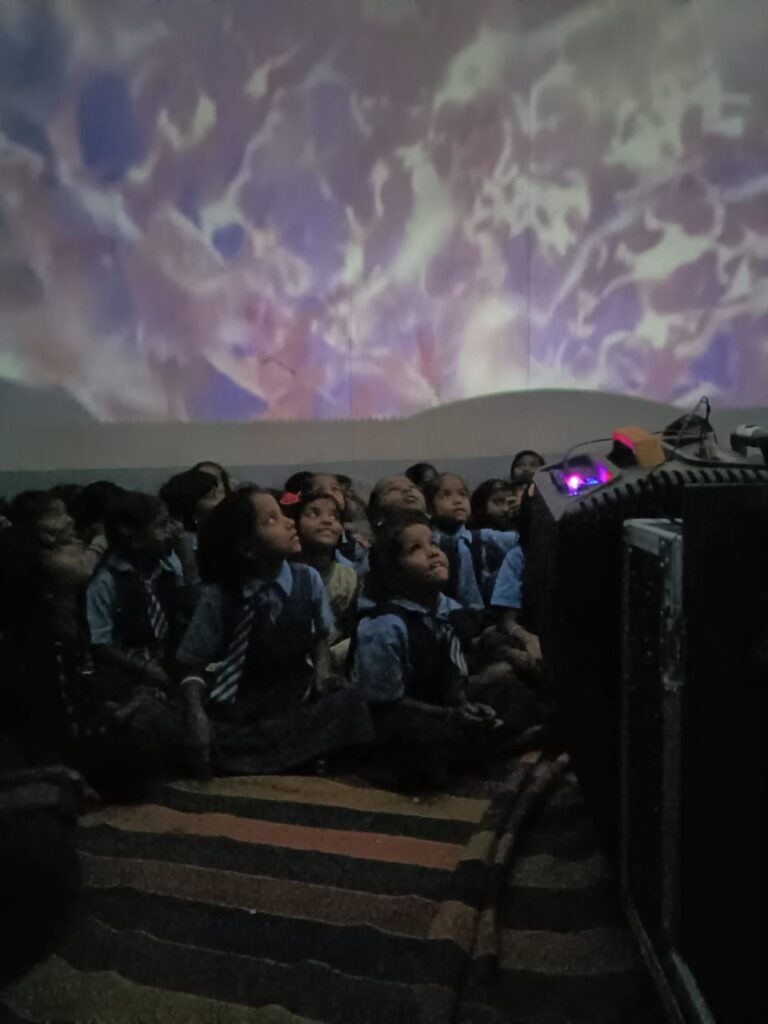
Students enter the inflatable dome in batches of 35–40 to experience a 45-minute 360-degree astronomy show. Inside the dome, advanced digital projections recreate celestial movements, constellations, and deep-space visuals, making complex concepts simple to understand. After the dome sessions, all students participate in an interactive quiz competition that reinforces learning, encourages participation, and boosts engagement. Students who perform well receive appreciation, making the experience rewarding and memorable. This structured learning model ensures every child receives a high-impact, immersive science experience.
Why Karnataka Needs Further Expansion
While all seven districts of the Kalyana Karnataka region are served by seven dedicated planetariums, the remaining 24 districts in Karnataka are supported by only four units. This imbalance highlights a clear need for programme expansion. Strengthening and scaling Shaaleya Angaladalle Taaralaya across the State will ensure fair, equal, and widespread access to digital science education.
Why India Should Adopt This Model
The success of this programme demonstrates that Mobile Digital Planetariums are an effective, scalable, and cost-efficient solution for delivering experiential STEM education in rural India. If adopted nationwide, this model can:
- Bridge the urban–rural learning gap
- Provide millions of students with access to immersive STEM learning
- Spark early scientific curiosity across underserved regions
- Create a future-ready generation inspired by space and science
This programme proves that high-quality, world-class science education can reach every corner of the country when technology and innovation come together.
Shaaleya Angaladalle Taaralaya stands as a powerful example of how immersive digital tools can transform education. Schools, Government departments, CSR partners, and institutions are invited to collaborate and help expand this model across Karnataka and India.